【庆贺翼虎乒乓八周年:从创新之火到时代之翼】
[Celebrating the Eighth Anniversary of TigerWing Table Tennis: From Spark of Innovation to Wings of an Era]
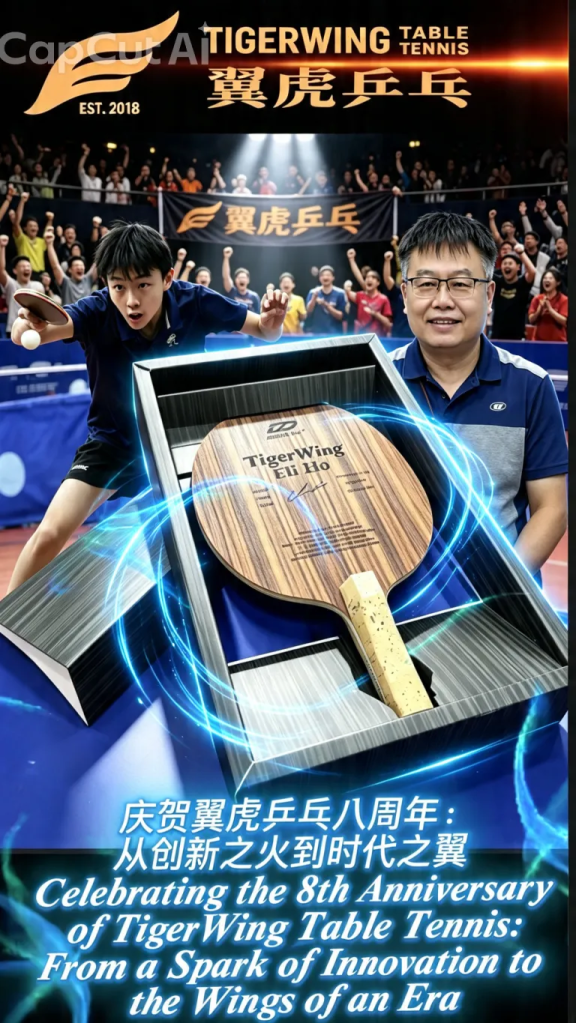
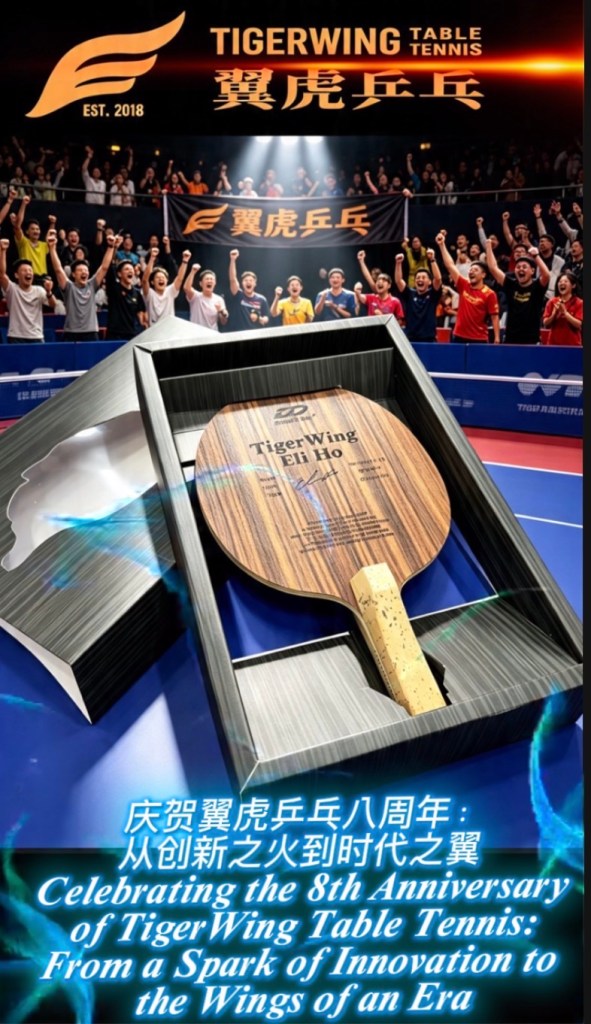
2026年8月23日,翼虎(TigerWing)乒乓迎来了它的第八个年头。
八年,不只是时间的累积,更是一种从“被看见”走向“被证明”的跃迁。从最初的一点灵光,到如今登上世界最高竞技舞台,TigerWing不再只是一个创新构想,而是一种正在改变乒乓球发展路径的现实力量。
如果说第七年,是从质疑走向认可;那么第八年,翼虎正在走向更大的舞台——成为时代的一部分。
从理念,到世界舞台
2026年,是TigerWing真正意义上“走进世界核心”的一年。
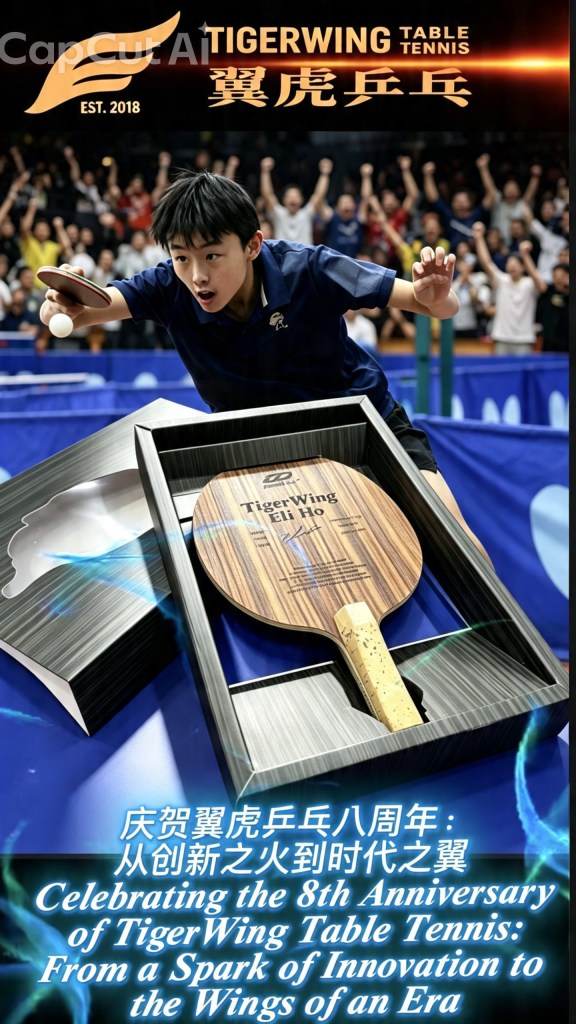
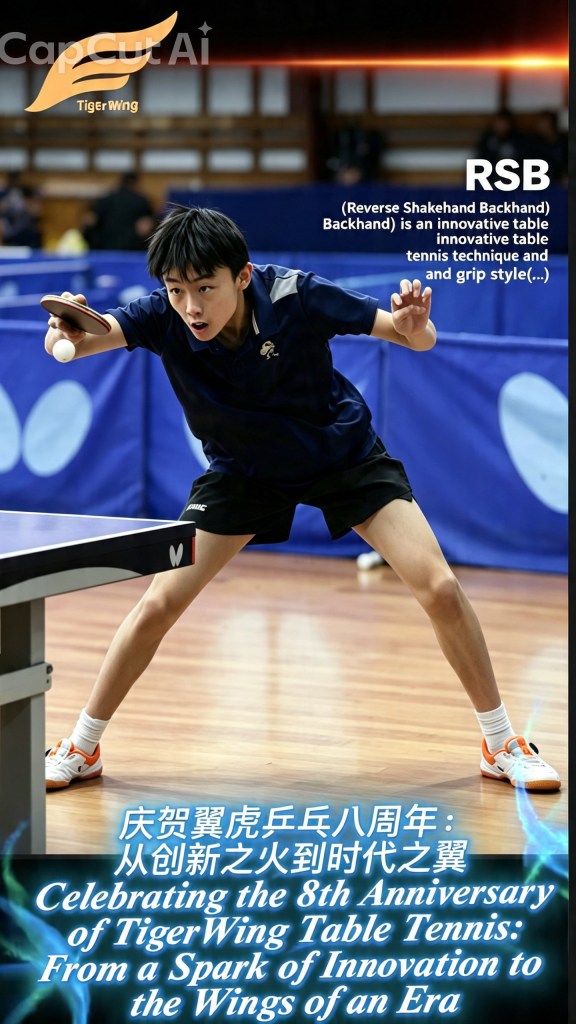
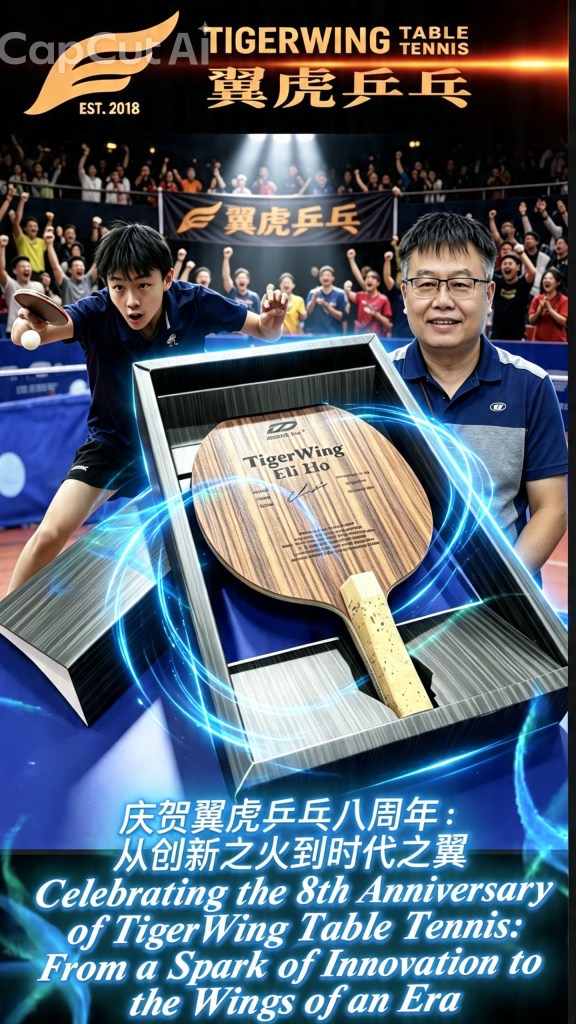
14岁的何倚天(Eli Ho),代表新西兰出战伦敦世界乒乓球团体锦标赛,成为史上最年轻参赛男子球员。这不仅是一项纪录的诞生,更是翼虎体系首次站上世界乒坛最高等级团体赛事的象征。
那一刻,TigerWing不再只是一个“被讨论的创新”,而是一个“参与竞争的体系”。
从车库到世界团体赛,从实验到实战最高殿堂,这条路走了八年。
从体系,到影响力
这一年,翼虎不再只是技术体系,而开始形成完整生态:
- 翼虎底板“TigerWing Eli Ho”,翼虎 “TigerWing CHA” 软木手柄小配件,和翼虎牌系列 “TigerWing Ex” 球拍量产上市,技术理念进入装备领域
- 线上课程推出,体系传播覆盖全球近20个国家与地区
- TTNZ正式将TigerWing握拍列为比赛选项之一
- 国际乒联持续资助与关注发展
这些变化意味着一件事:
TigerWing,已经从“个人创新”,走向“行业结构的一部分”。
当一种打法进入规则体系与官方结构,它的意义就发生了本质改变。
从故事,到历史评价
2026年,法国知名乒乓媒体Loy Sport用一整部纪录式视频,重新审视TigerWing的意义,并给予极高评价——称其为“乒乓球史上最伟大的故事之一”。
更引人注目的是,他们将何宗阳(John Ho)称为:
“现代乒乓球最重要的理论者之一”。
这不只是赞誉,而是一种历史定位的开始。
一个曾经在车库中反复试验、被质疑甚至被否定的理念,如今正在被写入乒乓球发展的叙事之中。
从父子,到一代人
TigerWing的核心,从来不只是技术。
它始于一个父亲对乒乓的执着,也成长于一个孩子的挥拍之间。但八年后的今天,它已经不再只属于他们。
越来越多的年轻球员,开始用“翼虎”的方式理解比赛——
用变化代替僵化,用节奏打破力量,用思考重构技术。
这是一种新的语言。
一种属于未来乒乓的语言。
八年:不只是坚持,而是进化
八年前,是一次“敢不敢想”的起点。
八年后,是一次“做到了什么”的回答。
TigerWing用八年证明:
创新不会因为质疑而消失,
只会因为坚持而成长。
它经历过孤独,但没有停下;
它面对过否定,但没有后退;
它承受过压力,却不断进化。
从“异想天开”,到“世界舞台”;
从“个人尝试”,到“体系认可”。
这不是奇迹,而是时间与信念的叠加。
一种正在展开的未来
如果说七年,是一段旅程的完成;
那么八年,更像是一个新时代的起点。
未来的乒乓球,会更强调变化、节奏与多维能力;
未来的训练体系,也将不再局限于单一结构。
而TigerWing,已经提前站在这个方向上。
它不是终点,而是一种可能性的开启。
在这个特别的八周年时刻,我们感谢所有参与、支持、质疑、推动这一体系的人。
因为正是这些不同的声音,共同塑造了今天的TigerWing。
八年已至,风起翼展。
未来的球场上,将有更多“翼虎”腾空而起——
带着创造的勇气,带着变化的智慧,带着不愿被定义的精神,
去打出属于他们的时代。
【Celebrating the 8th Anniversary of TigerWing Table Tennis: From a Spark of Innovation to the Wings of an Era】
August 23, 2026 marks the eighth anniversary of TigerWing.
Eight years is not just the passage of time—it is a transformation from being noticed to being proven. What began as a single spark of insight has now stepped onto the world’s highest stages. TigerWing is no longer just an unconventional idea; it is becoming a real force shaping the future direction of table tennis.
If the seventh year was about moving from doubt to recognition, then the eighth is about stepping into the era itself.
From Concept to World Stage
The year 2026 represents a true breakthrough moment.
At just 14 years old, Eli Ho represented New Zealand at the ITTF World Team Table Tennis Championships Finals in London, becoming the youngest male player in history to compete at this level. This was not merely a record—it marked the first time the TigerWing system appeared on the highest stage of international team competition.
In that moment, TigerWing was no longer just something discussed—it became something that competes.
From a garage training space to the world’s premier stage, this journey has taken eight years.
From System to Global Influence
In 2026, TigerWing evolved beyond a technical system into a growing ecosystem:
- The “TigerWing Eli Ho” TigerWing blade, “TigerWing CHA” – Cork handle accessories, and “TigerWing Ex” Racket Series entered full production, bringing the philosophy into equipment design
- Online training programs expanded the system to nearly 20 countries and regions
- Table Tennis New Zealand officially recognized TigerWing as a grip option in Top X competition player profiles
- Continued support and recognition from the ITTF development pathway
These milestones signal a fundamental shift: TigerWing has moved from personal innovation to becoming part of the sport’s structural landscape.
When a playing style enters official frameworks, its meaning changes entirely.
From Story to Historical Significance
In 2026, French table tennis media outlet Loy Sport released a documentary-style feature, describing the TigerWing journey as “one of the greatest stories in table tennis history.”
Even more notably, John Ho was referred to as
“one of the most important theorists in modern table tennis,”
and even described as
“le plus grand théoricien du tennis de table moderne.”
This is more than praise—it marks the beginning of historical positioning.
What was once tested in isolation, questioned, and even dismissed is now being written into the evolving narrative of the sport.
From Father and Son to a Generation
TigerWing has never been just about technique.
It began with a father’s persistence and took shape through a child’s instinctive play. But eight years later, it no longer belongs to just them.
More and more young players are beginning to interpret the game through the TigerWing School approach—
replacing rigidity with adaptability,
using rhythm to overcome raw power,
and redefining technique through understanding.
It is becoming a new language.
A language for the future of table tennis.
Eight Years: Not Just Persistence, but Evolution
Eight years ago, the question was: “Is this even possible?”
Eight years later, the answer is clear.
TigerWing has shown that innovation does not disappear under doubt—it grows through persistence.
It has endured isolation without stopping.
It has faced rejection without retreating.
It has carried pressure while continuing to evolve.
From “impossible” to “on the world stage,”
from “individual experiment” to “recognized system.”
This is not a miracle—it is the result of time, conviction, and relentless refinement.
A Future in Motion
If seven years marked the completion of a journey,
then eight years mark the beginning of a new era.
The future of table tennis will demand greater adaptability, rhythm, and multidimensional skill. Training systems will move beyond rigid structures.
TigerWing is already there.
It is not an endpoint—it is an opening.
On this special eighth anniversary, we acknowledge everyone who has supported, challenged, questioned, and contributed to this journey.
Because it is these voices—both supportive and critical—that have shaped TigerWing into what it is today.
Eight years in, the wings are fully spread.
And in the years ahead, more players will rise with TigerWing—
carrying creativity, adaptability, and the courage to challenge convention,
to play a game that belongs to their era.